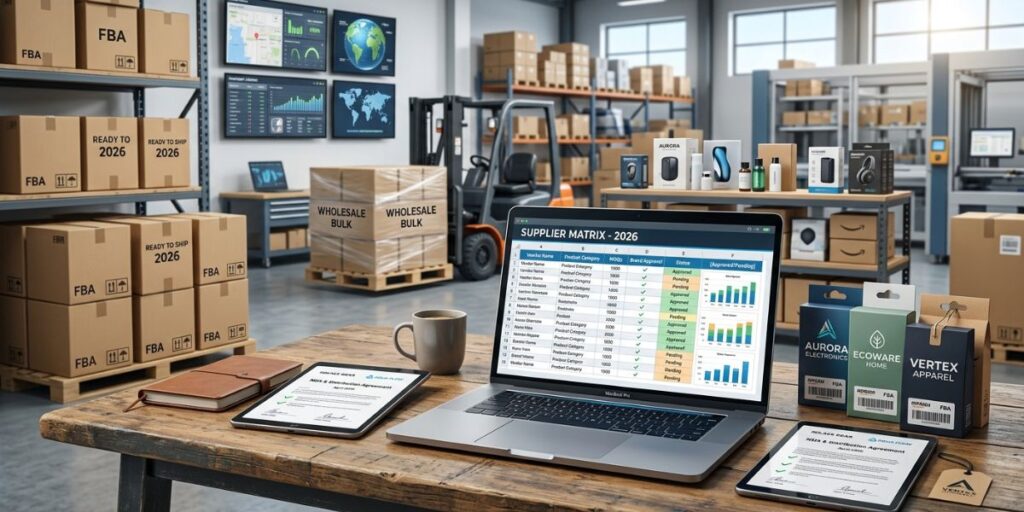
Wholesale sourcing means purchasing genuine products in bulk from manufacturers, brands, or authorized distributors and reselling them through online marketplaces.
Some brands require Amazon sellers to receive approval before listing their products. Approval helps protect customers and intellectual property while reducing counterfeit products.
Work with established brands, authorized distributors, and verified wholesalers. Review business credentials, product catalogs, pricing, minimum order quantities, and shipping capabilities before placing orders.
Suppliers or marketplaces may request business formation documents, an EIN, resale certificate where applicable, business contact information, invoices, and other supporting documentation depending on the situation.
Wholesale businesses often benefit from more stable inventory, stronger supplier relationships, better pricing opportunities, and long-term growth potential compared with one-off sourcing methods.
Avoid buying from unverified suppliers, using incomplete invoices, ignoring marketplace policies, or purchasing products without understanding brand restrictions.
Maintain organized invoices, build long-term supplier relationships, monitor inventory, and ensure every product complies with marketplace policies before listing.
It is Amazon’s process for allowing sellers to list certain restricted brands or categories when additional verification is required.
In many situations, valid commercial invoices from legitimate suppliers are part of the documentation Amazon may review.
Each model has advantages, but wholesale is often chosen for long-term scalability and supplier relationships.
Building a wholesale business starts with choosing reliable suppliers and maintaining accurate business documentation. Understanding brand approval requirements and marketplace policies can help reduce listing issues and support long-term growth.
AMZ LLC Prep provides guidance on supplier documentation, marketplace readiness, and business support for growing e-commerce brands.